

How India’s Economy and Geopolitics Are Shaping Its Future
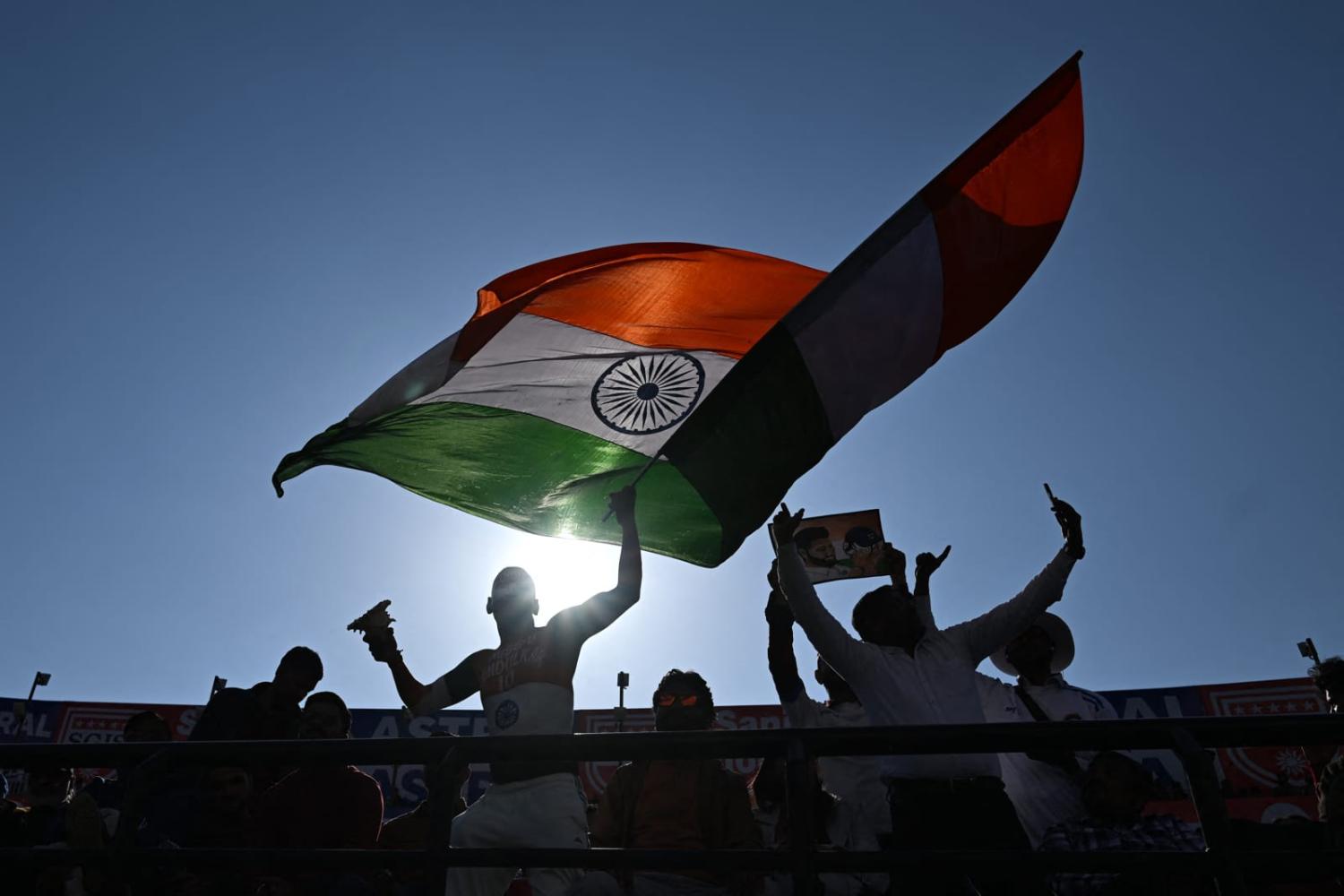
As India appoints a seasoned diplomat as its next ambassador to China, political analyst Sumit Ganguly explains India’s changing geopolitics.
As India appoints a seasoned diplomat as its next ambassador to China, political analyst Sumit Ganguly explains India’s changing geopolitics.
Sumit Ganguly
March 20, 2026Hoover senior fellow Šumit Ganguly recently released the second annual Survey of India through the Hoover Institution Press. The report offers a detailed examination of India’s political, economic, social, and environmental landscape, while also addressing the evolving US–India relationship. Ganguly spoke with Chris Herhalt about India’s shifting place in the world as it grows its economy and asserts itself globally.
On US–India relations, Ganguly reflected on the trade outlook:
“Yes, they certainly failed to materialize—those grand hopes that [Finance Minister] Nirmala Sitharaman had expressed during her visit to Hoover. Those hopes and dreams came crashing down on us. India and the United States did, however, reach a trade accord in early February of this year, and it dramatically reduced tariffs on India. That said, the US Supreme Court judgment on tariffs has now thrown the entire trade deal into disarray. We don’t quite know where matters stand. And apparently, negotiations are again under way between New Delhi and Washington to find common ground on trade. What is fascinating is that the Indians have scrupulously avoided saying anything that could be construed as being either inflammatory or intemperate in Washington, desperately trying to avoid a conflict with Trump and resurrecting more troubles.”
Discussing India’s diplomatic signaling, Ganguly addressed Prime Minister Narendra Modi’s engagement with China:
“I thought Modi did that in a moment of pique with the United States, trying to signal to the United States that India had other options. But frankly, I also believed that it was a singularly inapt move on his part because that is precisely the sort of thing that would get under President Trump’s skin and once again lead to more troubles in Indo-US relations. But subsequent to that move, which I thought was singularly ill-conceived on his part and said as much in one or two interviews, the Indians have really been hiding. They’ve been scrupulously trying to avoid piquing the United States in any fashion, that episode that you so correctly highlight notwithstanding.”
On the 2025 India–Pakistan conflict, Ganguly noted the risks of escalation:
“In the wake of the attack on Pahalgam, the resort in the disputed state of Jammu and Kashmir in the Indian-controlled portion thereof last year, the Indians resorted to an extraordinary set of strikes against Pakistan, and as you correctly point out, possibly even targeting their nuclear command and control facilities outside Islamabad. And this represented a dramatic escalation on the part of the Indian military, with the blessings of the political leadership. There was a great deal of concern about an escalatory spiral, which could, heaven forbid, culminate even in the use of nuclear weapons. None of that, of course, came to pass. And in about ninety-six hours, the crisis de-escalated and Trump claimed that he had played a major role in de-escalating it. There is an ongoing debate about his role, but that’s a subject for another day.”
He emphasized that India’s primary strategic challenge is China, not Pakistan:
“The real challenge that the Indians face is not Pakistan, which is really more of an irritant and can deliver periodic pinpricks, which the current government will not tolerate, as it demonstrated in the wake of the Pahalgam attack. It’s prepared to run risks and even countenance the possibility of escalation. The real challenge remains at the Sino-Indian border. That is not winding down anytime soon.”
Ganguly explained the structural nature of Sino-Indian tensions:
“Though India and China have exchanged sweet words in the recent past, those sweet words, as an old English expression goes, ‘butter no parsnips.’ The fundamental differences between India and China remain. It’s a structural conflict. The PRC [People’s Republic of China] is not going to give up its revanchist ambitions as far as India is concerned, and also sees India as a kind of an upstart in Asia that needs to be put in its place. Consequently, the Indians simply cannot afford to let their guard down along the Sino-Indian border.”
He highlighted that the conflict goes beyond territorial disputes:
“In part, it has to do with self-images of India and China in Asia. Both see themselves as great powers—at least, India is a potential great power. China is a great power that has already arrived. And the Chinese resent and have long resented India’s attempts to play in the same league. China thinks India belongs in the cheap seats—in the nosebleed seats, to use a baseball expression—and the Indians are not willing to concede that. There is a segment of Indian opinion that says, ‘Look, let’s accommodate China,’ but that’s not the dominant view amongst the Indian foreign policy and security policy elites.”
On domestic policy, particularly healthcare, Ganguly explained:
“Oh, that’s absolutely true. The Indians are trying to knit together this nationwide health care insurance program, but given the sheer size and complexity of India and the costs involved, it’s not going to be an easy task. And in addition to that, under Indian federalism certain subjects are handled by the central government and certain subjects by the state government. It’s kind of a patchwork quilt. Some state governments are far more prosperous than others and can thereby deliver on many of these promises, whereas other state governments are constrained by the lack of financial resources and also the lack of attention to health care over time.”
He added that implementation and intergovernmental coordination remain critical challenges:
“It’s two issues, really. The state versus federal, and resources. When you’re talking about 1.4 billion people, this is a herculean enterprise. Also, there is something that has dogged India since independence: the issue of implementation. American political scientists have written about implementation—the way that grand plans conceived in Washington don’t always materialize in Peoria. There is many a slip between cup and lip.”
Finally, Ganguly reflected on India’s economic growth and regional disparities:
“I’m an unabashed supporter of growth because in the absence of growth, you’re redistributing poverty, which is what India did for decades. So, the notion that we must focus on redistribution and not so much on growth is, I think, fundamentally a flawed idea. But there are two major problems with that growth. The growth is taking place on a couple of different axes. One is north-south… But in the north, poverty remains endemic, growth is slow, and access to public services poor. There is also a kind of east-west axis, where some of the western states are prospering at an extraordinary pace and doing exceedingly well. Not so much in many of the eastern states until you go into southeastern India. So that’s one issue. The other is inequality… India is reaching levels of inequality comparable to Brazil at an earlier stage of Brazil’s growth, and the gap is really striking and visible. And one fears that this could be the basis of social unrest in particular parts of India. I’d love to be proven wrong, but it is something I fret about.”
This article was taken and adapted from the Hoover Institution Press interview with Šumit Ganguly, edited for clarity and length.
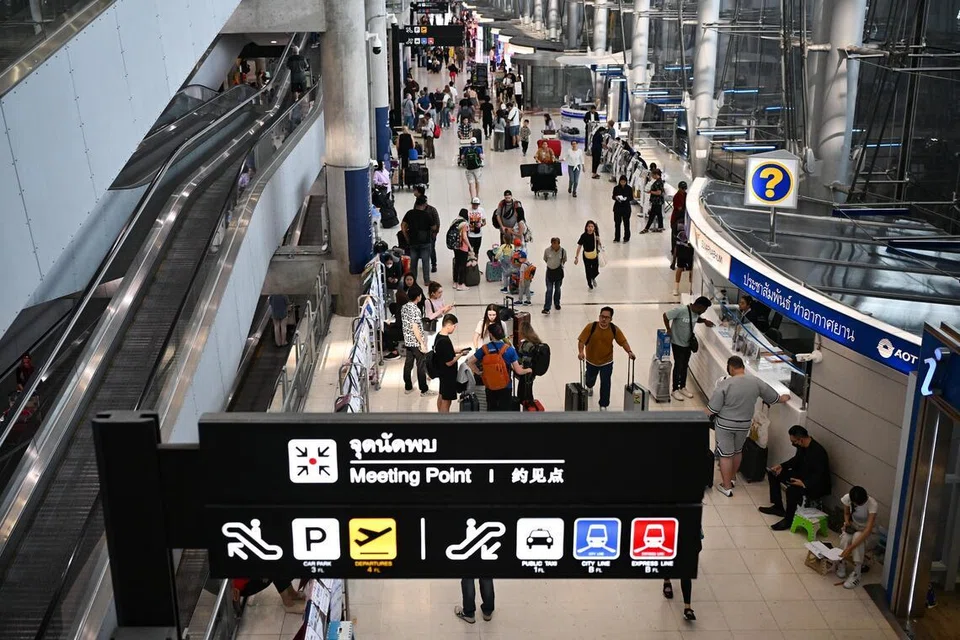
Most notably, arrivals from Europe and the Middle East – who often transit through hubs like Dubai – plummeted by 18 per cent.
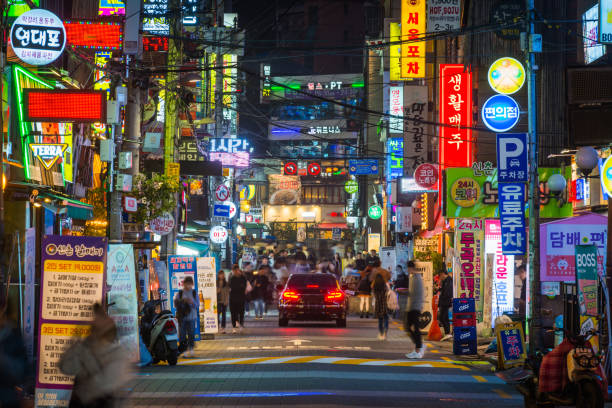
South Korea’s future depends on whether it can shift from viewing migrants as temporary.
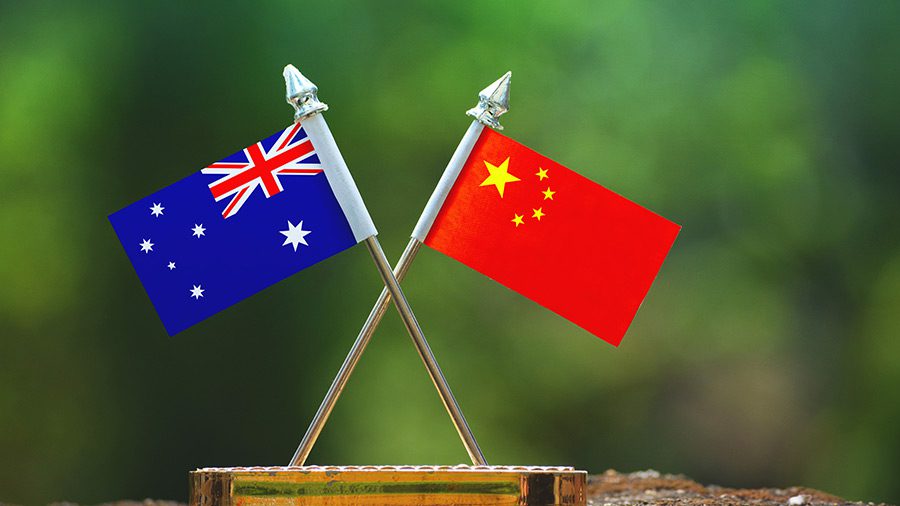
A decade after sealing a landmark trade pact, Australia is reopening the books on its economic ties with China.
Even without a formal closure of the Strait of Hormuz, conflict in and around the Gulf is already altering shipping patterns
And stay on top of the issues that matter most.