Even as missiles and drones fly overhead, millions of expat workers in the Gulf have continued sending money home – a system that, so far, has held under pressure. A protracted conflict, however, could put those flows at risk, with potential consequences for developing economies across Asia.
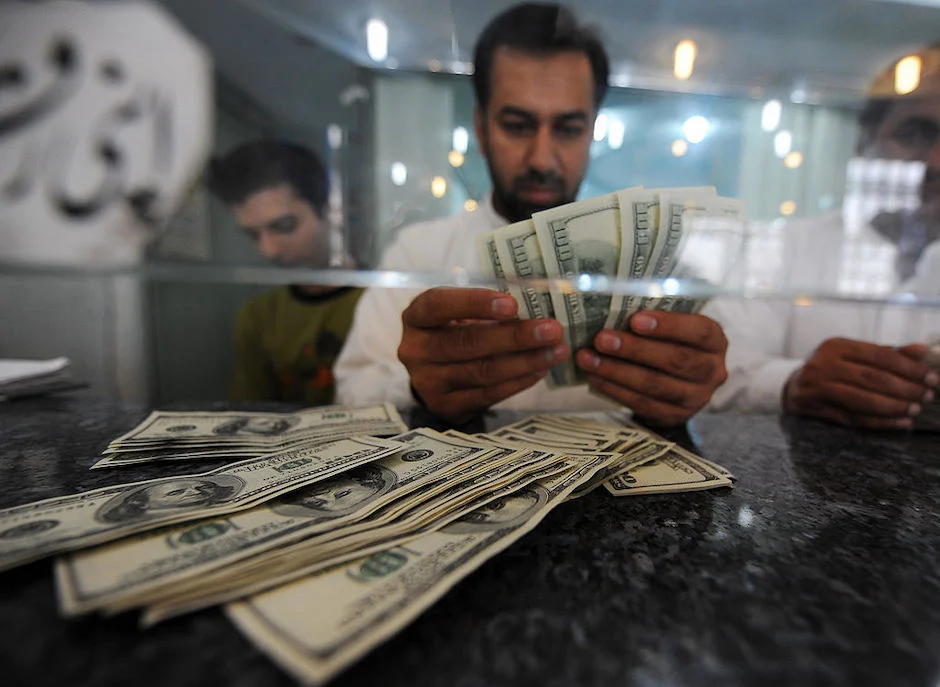
Each year, nearly 21 million foreign workers in the Gulf – from countries including India, Pakistan, Bangladesh and the Philippines – send tens of billions of dollars back to their home countries.
Indian expats in the Gulf send over $50 billion worth of remittances home annually – more than a third of all remittances India receives. Pakistan saw roughly $15 billion from the Gulf in 2024 – a record high for a corridor that has grown steadily over the past half a decade.
The largest routes are India-UAE, India-Saudi Arabia, Pakistan-Saudi Arabia and Bangladesh-Saudi Arabia, according to the International Organization on Migration, but countries like the Philippines and Egypt also see significant flows.
So Far, the System Is Holding
So far, despite the conflict, that money appears to still be moving – a reflection, experts say, of the resilience of the region’s financial infrastructure.
“There is no clear public evidence yet of a war-driven spike or collapse in remittance flows from the UAE. The data we have suggests continuity, but not enough clarity to isolate cause,” Abhishek Datta, vice president of business development at Dubai-based financial services provider Continental International Group tells WIRED Middle East.
“There has been visible digital friction, but no clear indication of systemic financial disruption or a breakdown in remittance flows. The more accurate reading is that the system has been tested under pressure and has largely held,” he says.
For now, the system appears stable. But that could shift if the conflict begins to weigh more heavily on the region’s economy – particularly if growth slows and companies start cutting jobs. Any such impact would likely be felt across South Asia.
Where the Real Risk Lies
“Remittances have quietly kept Pakistan afloat through every crisis. That cushion now looks less certain. If Gulf economies stall, labour demand will naturally soften,” Faisal Mamsa, CEO of Pakistan-based financial data and analytics platform Tresmark said.
Meanwhile in India, even a 10% reduction of Gulf remittances to the country would see $5 billion in crucial foreign income wiped from the economy.
“A prolonged war poses a risk to remittance flow for India. In recent years, strong remittance inflows have cushioned the impact of a widening merchandise trade deficit,” Indian private bank HDFC Bank said in a report.
So far, the conflict shows little sign of easing, and the economic impact is growing. The Strait of Hormuz, responsible for one fifth of the world’s oil and natural gas, is effectively closed. Iran, in response to attacks on its own energy infrastructure, has attacked Gulf energy assets across the GCC.
War Pressure on the System
The consequences are likely to be significant and lasting: Iran’s bombing of a key Qatari gas field is likely to cut the country’s capacity by 17% for up to five years.
There’s also been a series of more immediate events that have called into question the tech underpinning global remittance flows.
In the early days of the war, a drone attack on AWS data centres knocked out connectivity for various businesses, including a number of banking apps, leaving users unable to access their accounts or transfer money.
That attack only affected the front end: users couldn’t interact with the tools they usually used to send money or manage their finances, but it didn’t hit the underlying financial infrastructure that actually moves the money. It was, however, a reminder of the fragility of modern financial infrastructure.
The system that moves money is not the same as the systems people use to access it – and in a crisis, that distinction matters.
Built To Withstand Disruption
“Given how much modern remittance systems rely on shared digital infrastructure like cloud platforms and telecommunications networks, there’s inevitably risk involved,” Zane Ulhaq, head of MENA at London-based software consultancy Endava, tells WIRED Middle East.
“Remittance infrastructure operates across multiple layers, from customer-facing applications through to transaction processing, settlement and payout networks. Disruption at any one layer can have different operational impacts,” Ulhaq says.
Despite those challenges, Ulhaq is clear: the Gulf’s financial system has held up.
“Redundancy, failover mechanisms and continuous monitoring all play a role in ensuring that, even under stress, systems remain operational. And in recent weeks, the capabilities of these systems have been demonstrated,” he says.
Why Alternatives Haven’t Taken Over
That resilience, he says, is part of the reason why alternative rails like fintech tools, cryptocurrencies and stablecoins – blockchain-based cryptocurrencies with their values tied to real-world assets – are still only viewed as supplementary resilience tools rather than replacements.
Despite major stablecoin issuers like Circle and Ripple expressing interest in entering the UAE’s $44 billion remittance market, there is “no strong evidence yet” of a structural shift towards remittances based on cryptocurrencies, stablecoins or other alternative assets, Continental Group’s Datta says.
“If anything accelerates from this period, it is likely to be redundancy, instant payments and regulated digital infrastructure, rather than a rapid shift into alternatives,” he adds.
For now, the system is holding. Money continues to move, even as parts of the region’s infrastructure come under strain.
But what this moment reveals is not just resilience – it’s dependence. The Gulf’s remittance flows rely on layers of technology and economic stability working in tandem. If either begins to falter, the effects will not be contained within the region.