
How Trump’s War With Iran Is Impacting Asia’s Economy
From New Delhi to Bangkok, governments are bracing for a new wave of inflation driven by disruptions in the world’s most important energy corridor.
From New Delhi to Bangkok, governments are bracing for a new wave of inflation driven by disruptions in the world’s most important energy corridor.
Times
March 20, 2026The economic fallout from the U.S. and Israel’s war on Iran is rippling across the world, but the effects are especially pronounced in Asia.
From New Delhi to Bangkok, governments are bracing for a new wave of inflation driven by disruptions in the world’s most important energy corridor, the Strait of Hormuz, which has been effectively shut by Iran in retaliation for American and Israeli attacks. Across a number of Asian countries, officials have closed schools, told workers to stay home, and asked people to adopt other fuel-saving measures as they anticipate surging oil prices to push up the prices of nearly everything from food to transport to electricity.
“The conflict threatens to trigger a new wave of cost-of-living pressures that embattled governments and central banks around the world will struggle to deal with, especially coming from the supply-side,” Heron Lim, a lecturer of economics with ESSEC Business School, tells TIME.
But “while Asia is directly exposed,” says Wayne Winegarden, an economist at the Pacific Research Institute, “the dynamic impacts will spread the economic harm globally,” as Asia is a major hub for global trade and accounts for around half of the world’s manufacturing output.
Here’s what to know about how the war in the Middle East is impacting Asia—and why that matters for the rest of the world.
Looming energy crisis
Around 80% of Asia’s oil imports pass through the Strait of Hormuz, which has been effectively closed since Feb. 28 with Iran threatening to attack vessels that transit through the route. Vietnam has one of the thinnest energy buffers in Asia, with its oil reserves estimated to last less than 20 days, according to a report by the Asia Media Center. Pakistan and Indonesia maintain reserves of around 20 days. India, Thailand, and the Philippines about two months.
The Philippines, Thailand, Malaysia, and Brunei rely on imports for 60 to 95% of their crude supply, Alloysius Joko Purwanto, an economist at the Jakarta-based Economic Research Institute for ASEAN and East Asia, told Al Jazeera.
A bulk of the oil and LNG produced by the Middle East also goes to Asia. Around 80% of Qatar’s LNG exports are shipped to Asia, including to China, India, Japan, and South Korea, through Hormuz. And about two-thirds of Iraq’s crude oil exports are shipped to China and India, whose refineries are set up to process heavier grades, according to Winegarden. But many of those refineries have temporarily halted production after Israeli attacks on Iranian energy infrastructure and suspected Iranian strikes on several facilities across the Middle East, including in Qatar, the United Arab Emirates, and Saudi Arabia.
This is “not only a Middle East oil shock but also a wider Asian gas and power-security problem,” Lim tells TIME.
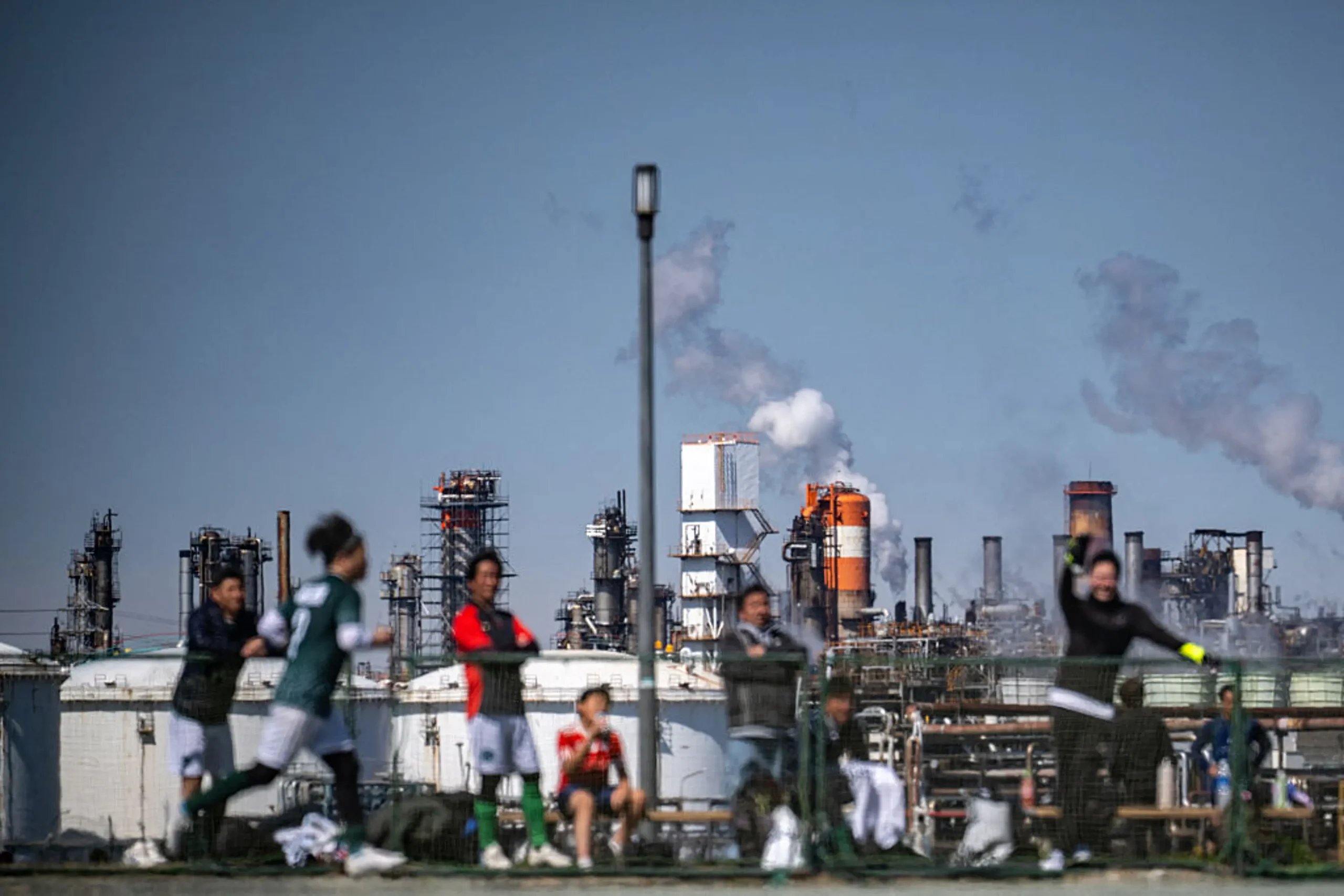
In the wake of disruptions, India invoked emergency powers to redirect supplies of liquefied petroleum gas from industrial users to households. Thailand told state agencies to work from home to begin curbing demand for fuel. Bangladesh, which relies on imports for around 95% of its energy needs, imposed fuel caps, closed universities, turned off light displays for the coming Eid-al-Fitr celebrations, and stationed troops at oil depots to prevent hoarding as it turned to China and India for diesel imports. Nepal said this week that it will begin rationing cooking gas. The Philippines announced a reduced four-day work week for some government officers and urged people to keep their air conditioning at 24 degrees Celsius (75 degrees Fahrenheit) or higher. And Pakistan has sent its warships to escort merchant vessels in the Middle East and introduced a slate of fuel-saving measures.
South Korea also imposed its first fuel cap in nearly three decades, while Japan began releasing oil from its national reserves this week.
Governments have also introduced market interventions to stabilize fuel prices. Thailand placed a temporary price cap on diesel, Vietnam is weighing temporary cuts to fuel import tariffs, and Indonesia said it will increase fuel subsidies to absorb the energy shock. In talks with Indonesia and Russia this week, the Philippines also urged nations to honor trade contracts supplying fuel to the Philippines.
One country in Asia, however, may be able to weather the storm. China, which imports around 40% of its oil from the Middle East, had stockpiled crude before the war, allowing it to tap on its 1.4 billion barrels of crude in strategic storage. China is also better positioned due to its partnership with Iran and Russia, which has allowed it to continue importing pipeline natural gas over land from Russia. China also has long been one of the biggest buyers of Iranian oil, despite Western sanctions, and Iran has reportedly allowed Chinese vessels to pass through the strait even while blocking other shipping.
Iran is also weighing allowing cargoes traded in Chinese yuan to transit through Hormuz, an Iranian official told CNN. Such a move would tilt energy flows toward China and challenge the U.S. dollar’s dominance in global markets. Still, the U.S. is more likely to benefit economically from the oil crisis than its geopolitical rival, at least in the near term, because China still imports far more energy from the Middle East. The U.S. is also a major oil producer, and American oil companies could benefit from the loss in Middle East supply.
Another sector that stands to suffer from the disruption to the energy sector is agriculture. Asia depends heavily on the Middle East for its supply of fertilizers, and the Persian Gulf is a key hub for global fertilizer production, as natural gas is a crucial input for fertilizers such as urea, the world’s most widely used nitrogen fertilizer.
The U.S., comparatively, imports fertilizers like urea and sulfur from a range of sources, including Canada and Russia. But farmers across the U.S. could still face higher prices due to disruptions in fertilizer supply, which would lead to higher grocery prices, Zippy Duvall, president of the American Farm Bureau Federation, warned in a letter to President Donald Trump last week.
A disruption to Middle Eastern fertilizer supplies could push major importers such as India and Brazil—both heavily dependent on Gulf producers—to seek alternative sources, potentially driving up global prices, according to economists at the American Farm Bureau. Higher prices could ripple back to the U.S. and raise costs for farmers, they said, while large producers like China might respond by restricting exports to protect domestic supply.
Asian exports restricted
The war is also stranding Asian exports that are unable to pass through Hormuz, while Middle East buyers have abruptly halted purchases amid continued uncertainty around maritime trade. Thai rice exports to the Middle East have effectively stalled after shipping disruptions forced exporters to unload cargo. Two vessels carrying about 80,000 tons of rice bound for Iraq were stopped at a Bangkok port. India’s agricultural exports have also been impacted, with exports to Gulf countries of bananas, rice, and other products dramatically cut. Farmers have been forced to dump supplies into local markets at lower prices.
Lim tells TIME that the war is putting global supply chains under more strain than the pandemic, due to the threat of physical loss of products. “This conflict is creating physical supply disruptions. Even if temporary, rising insurance costs, and increased perceived risk are rippling through global supply chains,” Lim says. “The tankers anchored outside Hormuz today represent goods and energy that won’t arrive at their destinations in two to four weeks, creating a lagged but severe impact.”
The Middle East is also a significant producer of petrochemicals—which are used in plastics, resins, and packaging for electronics—as well as helium, which is used to manufacture semiconductors. Qatar, the second-largest producer of helium after the U.S., supplying around a third of the world’s helium, halted production of LNG and associated products, including helium, at its facilities in Ras Laffan following suspected Iranian strikes on the industrial hub.
Middle East supply chain disruptions would likely tighten global helium supply and raise prices, potentially affecting major semiconductor industries in Taiwan, South Korea and Japan in the event of a prolonged conflict. Electronics—largely semiconductor assembly, testing and packaging—also account for more than half of the Philippines’ exports. The electronics and semiconductor industries are also both energy intensive and highly dependent on air cargo, both of which face disruptions from the conflict.
“Disruptions to shipping routes or aviation corridors can transmit quickly to production costs, exports, and tourism activity,” a report by the Asian Development Bank said, noting that rising jet fuel prices could lead to knock-on effects that impact tourism and broader consumer spending. Economists have warned that a prolonged conflict beyond three months could halve economic growth in Thailand as exports and tourism are hit while energy prices rise.
Countries in the Persian Gulf also face potential food and water security challenges due to disruptions to imports, Coface Middle East expert economist Seltem Iyigun tells TIME, noting that Gulf Cooperation Council countries—Bahrain, Kuwait, Oman, Qatar, Saudi Arabia, and the U.A.E.—import 80– to 90% of their food through maritime trade.
Freshwater supply in the region relies on large coastal desalination hubs along the Gulf shoreline, Iyigun says. Already, a strike hit an Iranian desalination plant on Qeshm Island that supplies water to around 30 villages. Iran blamed the strike on the U.S. although both the U.S. and Israel have denied responsibility.
“Attacking Iran’s infrastructure is a dangerous move with grave consequences,” Iranian Foreign Minister Abbas Araghchi posted on March 7. “The U.S. set this precedent, not Iran.” The next day, Bahrain said an Iranian drone “caused material damage” to a desalination plant, although water supplies have not been disrupted.
Inflation could have global repercussions
Economists say that the war driven by the wealthiest country in the world will most affect some of the poorest.
“Smaller energy-importing economies, including the Philippines, Pakistan, and Sri Lanka, are likely to experience comparatively stronger macroeconomic effects,” the ADB report said. “In these economies, higher oil prices tend to transmit rapidly into inflation and exchange rate pressures through widening current account deficits and increased foreign currency demand.”
Emerging markets are especially exposed to the wider impacts on inflation, exchange rates and import costs, says Lim. The conflict has already begun to reprice energy, shipping, insurance, aviation, and financial risk globally, he adds, raising the risk of inflation.
“Low‑income countries are among the most vulnerable everywhere: many rely heavily on Middle Eastern fertilizers and fuels and have limited buffers to absorb higher import costs,” Nizard tells TIME.
“We are victims of a war that we didn’t choose nor want,” President of the Philippines Ferdinand Marcos Jr. said in a video message last week.
But Nizard notes that there are a number of second order effects that could impact the U.S.: “How will the government and the central bank react? What cascading supply chain disruptions will we get from possible production stops in Asia?”
“A more severe escalation—particularly one involving prolonged disruptions to the Strait of Hormuz—could have more significant consequences,” the ADB report said. “Sustained disruptions could push oil prices much higher, weaken global trade, and slow economic growth.”
(The original article can be accessed here.)
And stay on top of the issues that matter most.