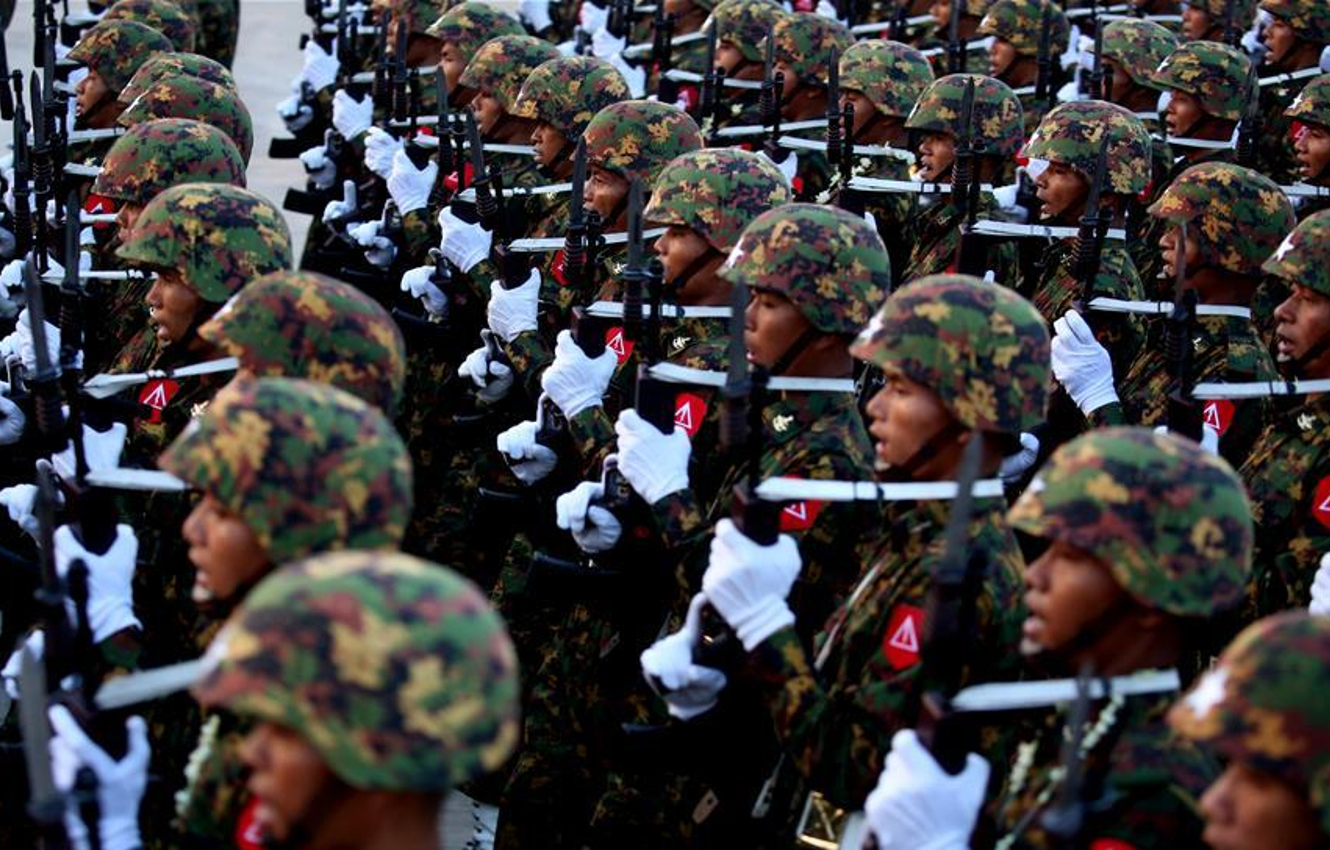
Myanmar has been in the grip of political turmoil since February 2021, when the military seized power from the elected civilian government, triggering a prolonged conflict between the armed forces and various resistance groups that has resulted in widespread civilian casualties and displacement. Against this backdrop, the United States passed a new piece of legislation aimed at applying economic pressure on the military administration. On February 9, 2026, the US House of Representatives unanimously passed the BRAVE Burma Act — formally known as the Bringing Real Accountability Via Enforcement in Burma Act. The bill has since been referred to the Senate Committee on Foreign Relations, where it awaits further deliberation.
What Does It Actually Do?
The BRAVE Burma Act is primarily a sanctions enforcement mechanism. It requires the US government to conduct annual reviews and, where criteria are met, impose or expand sanctions on Myanmar’s state-owned enterprises, key financial institutions, and foreign entities involved in supplying aviation fuel to the country’s military administration.
Two institutions sit at the centre of the legislation: Myanma Oil and Gas Enterprise, which is among the most significant sources of revenue for the military government, and Myanma Economic Bank, a foundational institution within Myanmar’s state financial system. The annual review process is set to run for seven years, reflecting a preference for sustained long-term engagement over one-off measures.
The bill also has a structural diplomatic dimension. It creates a dedicated United States Special Coordinator for Burmese Democracy within the State Department, with a mandate to coordinate sanctions policy, liaise with civil society groups inside Myanmar, and engage international partners on aligned approaches. Separately, the US Treasury would be directed to oppose any expansion of Myanmar’s shareholding at the International Monetary Fund for the duration of military rule.
Building on Existing Policy
The BRAVE Burma Act is not a standalone measure but an extension of the Burma Unified through Rigorous Military Accountability Act of 2022, which had already established a framework for sanctions and reporting requirements related to Myanmar. The new legislation extends the sunset period of those provisions from eight to ten years, reflecting a view in Washington that the situation requires a longer-term policy commitment rather than measures with a near-term expiry.
The Broader Context
Myanmar’s ongoing conflict has drawn attention from a range of regional and international actors, each with differing interests and approaches. The Association of Southeast Asian Nations has pursued dialogue through its Five-Point Consensus framework, though progress has been limited. China and Russia have maintained engagement with the military administration, while Western governments have broadly supported the opposition National Unity Government and called for a return to civilian rule.
The US legislation fits within this broader pattern of diverging international responses. Proponents argue that economic pressure — particularly on revenue streams and fuel supplies — represents a meaningful lever of influence. Others caution that sanctions regimes can have uneven effects, often falling harder on civilian populations and small businesses than on the intended targets, and that diplomatic engagement may yield more durable outcomes.
What the passage of the BRAVE Burma Act does make clear is that Myanmar’s internal political situation continues to attract significant international attention, and that the policy tools being deployed in response are becoming increasingly specific and long-range in their design.