

Why AI Has Not Yet Upset India’s IT Industry

Deploying the technology is the real world is proving tricky.
Deploying the technology is the real world is proving tricky.
The Economist
March 20, 2026This year’s edition of the annual jamboree for Indian IT firms, held last month in Mumbai, was a study in contrasts. The president of Nasscom, the industry body, hailed a new sales record: it expects that its members will have enjoyed combined revenue of more than $315bn in the year to March, up by 6% on the year before. Yet delegates tearing their eyes from the stage and glancing at their phones would see share prices plunging. The Nifty IT index dropped by around a fifth following a viral blogpost that imagined new artificial-intelligence coding tools would wipe the industry out altogether.
The case for gloom is obvious. For decades the industry has profited from labour arbitrage: the cost of hiring a coder in Pune, a city in western India, is a fraction of hiring one in Pasadena, a Californian suburb. It wasn’t just software engineers: call-centre and data-entry jobs were outsourced to India, too. IT consulting firms such as Infosys and Tata Consultancy Services (tcs) derive much of their revenue by providing customers with armies of Indian coders who perform labour-intensive tasks such as maintaining software, answering support tickets and writing routine code.
Now, however, there is an even cheaper alternative: an AI agent. Claude Code, a tool from Anthropic, can put together a prototype of a software application in minutes. Making it run efficiently and securely requires deeper technical knowledge. If one skilled developer armed with Claude can do the work of several, then businesses may find themselves with less need for the coders that Infosys and tcs provide.
So far, however, the predictions that the mass automation of coding will leave outsourcing firms obsolete seem overblown. Their clients often hope AI will create huge productivity gains by, for example, using the technology to quickly and cheaply build a new internal HR tool. But such improvements in productivity are only possible in “greenfield” environments with “clean architecture”, argues Atul Soneja, chief operating officer at Tech Mahindra, an IT firm. Deploying AI in “brownfield” environments—with legacy code, a lack of documentation and multiple systems that must all continue to operate in real time—is far trickier. In the end, clients often realise that their AI dreams were too ambitious and end up hiring as many outsourced coders as before, say executives.
What is more, the AI boom may present an opportunity for the consultancy arms of India’s outsourcers. They argue that they can now fulfil more of a strategic role for their clients: getting the most out of AI requires understanding all of the context around the problem, something that consultants with experience across businesses can offer. Nandan Nilekani, one of the founders of Infosys, reckons that such services related to AI could be worth $300bn-400bn by 2030.
The bulls have data on their side. The most recent results for the outsourcers were slightly better than expected. tcs reported that in the three months to January AI-related sales rose by 17% on the previous quarter, making up 6% of total revenue. Headcount has fallen at tcs but risen at its competitors in recent years, despite the possibility of automation. A report by Yogesh Aggarwal of HSBC, a bank, notes that there are few “tangible case studies to support claims of AI cannibalisation of traditional software”.
So-called global capability centres (GCCs) are another part of the picture. In essence, these are outsourcing arms dedicated to a single company, such as Lululemon or Wells Fargo, and employ far more of India’s tech workers than the it consultants do. Their rise reflects the fact that nearly every company now sees its technology as core to its business. If companies do more of their coding in-house, aided by agentic tools, that may still benefit India’s it industry. Many IT consultants offer services linked to GCCs, helping businesses set them up, for instance.
From the moment ChatGPT made its debut in November 2022, Indian outsourcers have been pegged as one of the sectors most exposed to displacement by ai. More than three years on, though, the promised disruption has not arrived. Revenues are growing, and hiring continues. Yet the sector nonetheless encapsulates the effect of ai on business. The technology may still upend the industry, but so far its effect is unclear and uneven.
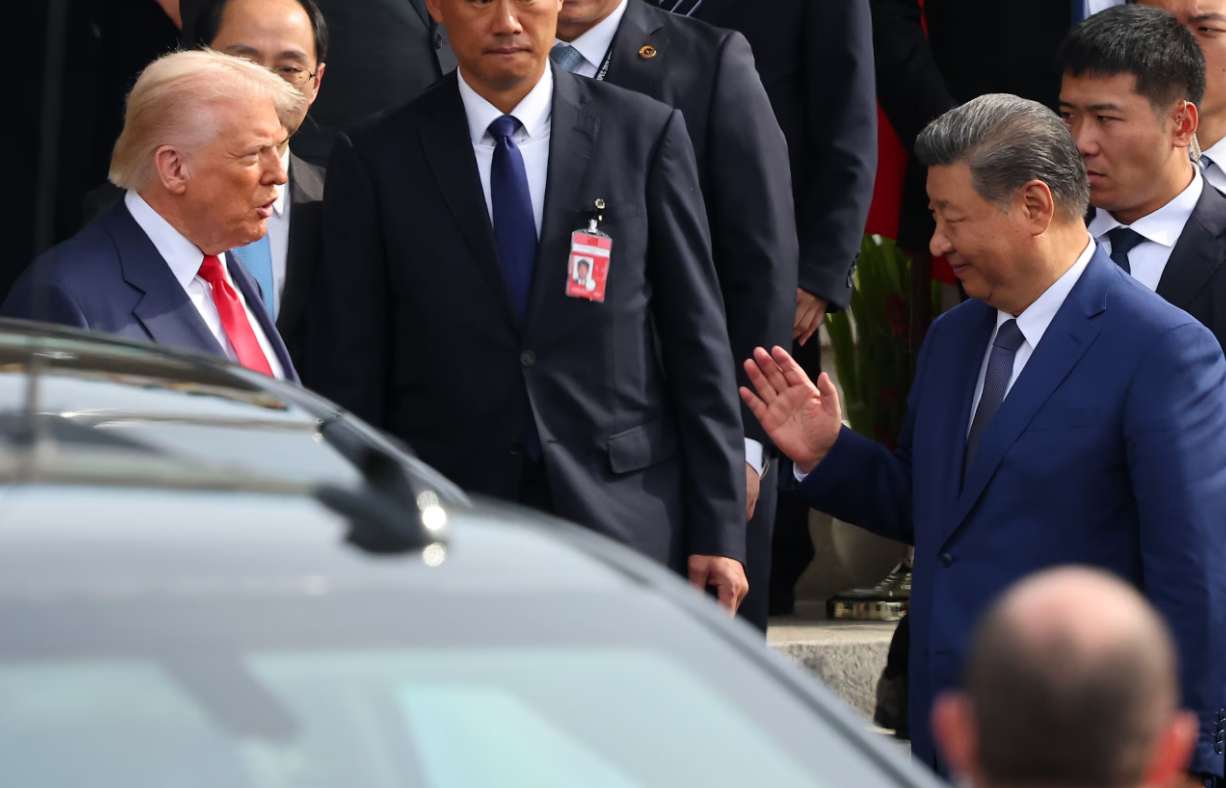
Beijing Seeks to Decipher Effect of Iran War on U.S. Midterms and Best Way to Apply Pressure When Trump Meets Xi

From New Delhi to Bangkok, governments are bracing for a new wave of inflation driven by disruptions in the world’s most important energy corridor.
And stay on top of the issues that matter most.